Overview of Dutching in Australia sports betting
 For Australian punters, Dutching is a structured staking method rather than a shortcut to easy money. In simple terms, you bet more than one outcome in the same market and set your stakes so the return is roughly the same whichever of your chosen selections wins. It is popular with value-seekers because Australia has a competitive online wagering market, Betfair operates as Australia’s only online betting exchange, and ordinary gambling wins are generally not assessable income unless you are effectively operating a gambling business. Set expectations correctly. Dutching is not a magic system, and it does not turn every bet into a guaranteed winner. What it can do, when used properly, is increase the chance that at least one of your selections lands, smooth profit swings compared with an all-in single, and fit naturally with matched betting in Australia when exchange liquidity is thin, or rules are awkward. Matched Betting Australia also maintains a free resources hub for calculators and guides aimed at Australian users. This guide covers the fundamentals, the maths, the main strategy types, practical racing and football examples, and a step-by-step workflow for placing your first Dutch bet.
 What is Dutching in sports betting?
Dutching in sports betting is a method of placing several bets in the same market so that you receive the same, or a very similar, profit whichever of those selections wins. Instead of backing just one horse or one scoreline, you split your stake across two or more outcomes and calculate the stakes so the return is level. In Australian terms, that might mean backing three live chances in a Flemington sprint, or covering several likely scorelines in an A-League match. The core idea is always the same:- Backing multiple outcomes
- Using maths to set stakes
- Pursuing equalised returns rather than one all-or-nothing hit
Why Dutching suits the Australian betting landscape
 Australia is unusually well-suited to Dutching because punters can compare prices across licensed bookmakers and, in many cases, across exchange markets as well. Betfair describes itself as Australia’s only online betting exchange, which gives local bettors an extra pricing layer beyond standard fixed-odds bookmakers. That creates fertile ground for Dutching in several ways. More bookmakers mean more chances to find a better combination of prices. Racing markets often feature differences between fixed odds, tote-linked products, and exchange prices. And because ordinary betting wins are generally not assessable income unless the bettor is carrying on a gambling business, even modest efficiency gains can matter over time.
 Dutching compared with matched betting, middling, and arbitrage
Matched betting in Australia
In classic matched betting, you place a qualifying back bet with a bookmaker to trigger a promotion, then lay the same selection on an exchange to remove most of the risk. You then repeat the process to convert the bonus into cash. Matched Betting Australia’s core calculators and guides are built around that back-and-lay workflow. Dutching enters the picture when that ideal pattern breaks down. Common examples include thin exchange markets, mismatched settlement rules, or markets such as niche player props where a clean lay side does not exist.Arbitrage betting
Arbitrage is the special case where the combined implied probability of all outcomes is below 100 per cent, letting you back every outcome and lock in a profit whatever happens. Some Dutch bets are genuine arbs, but most are not. More often, Dutching covers only a subset of outcomes that you believe carry the value.Middling and hedging
A middle usually involves taking opposite sides of totals or handicaps at different lines and trying to hit a narrow band where both bets win. Dutching is similar in spirit, but instead of splitting the stake across numbers on a line, you split the stake across selections in a market. It can also be a more controlled alternative to bookmaker cash-out, because you choose the hedge price and the hedge size yourself.The maths behind Dutching, explained with Australian-style odds
For decimal odds, the implied probability is simply:Implied probability = 1 / decimal odds
So if three runners in a Randwick race are priced at 3.50, 5.00 and 9.00, their implied probabilities are about 28.6 per cent, 20 per cent and 11.1 per cent. Added together, that gives roughly 59.7 per cent. That total helps you judge how much of the market you are covering and whether your chosen cluster of runners is remotely efficient.Equal-return Dutching for two selections
Suppose you want a return of $100 whichever of two horses wins.- Horse A at 4.00 needs a $25 stake
- Horse B at 5.00 needs a $20 stake
Equal-profit Dutching for three selections
With three selections, most punters now use a Dutching calculator rather than doing the algebra by hand. The basic logic is unchanged: convert the odds into weights, normalise them, then multiply by your total stake or target return. For an A-League correct-score market, for example, you might back 1-0, 2-0, and 2-1 to the home side. The calculator will split the outlay so any one of those scores produces a near-identical net result. Matched Betting Australia promotes free calculator tools for Australian users, which are far more practical than manual sums once you start combining several prices.Combined odds of a Dutch
Once you know your total stake and total return, you can treat the whole Dutch as a single position: Combined decimal odds = total return / total stake That is useful when reviewing results over a season because it lets you compare a Dutching betting strategy with ordinary singles on a like-for-like basis.Deciding whether a Dutch is actually valuable
A neat spreadsheet does not automatically mean a good bet. A sensible checklist is built around three questions.Selection edge
Do you have a genuine opinion? Dutching still requires you to narrow the market to runners or outcomes that are more likely than the prices imply.Price edge
Do the combined prices make sense? If the implied probabilities of your chosen selections add up to a very high figure, the market may simply be too expensive.Practical friction
How many bookmakers are involved? Are the stakes realistic? Is there a risk of sudden odds movement or poor liquidity? A mathematically tidy Dutch can still be a poor real-world trade if it takes five accounts and tiny edges to assemble. A few quick sniff tests help. If the total implied probability of your chosen runners is well above 110 per cent, you probably need a very strong opinion. And if your combined Dutch price is clearly worse than simply backing your strongest fancy, you should ask whether the extra coverage really adds value. Tools can help with this screening. Imperial Wealth says its free Sports Maximiser software compares bookmaker and Betfair odds, and calculates arbitrage, ROI and bonus conversion opportunities. Matched Betting Australia’s free resources hub also provides local calculators and promotions content.Main Dutching strategy types
Simple or equal-stake Dutching
This is the easiest version. You back two or more selections for the same stake and accept that the profit differs depending on which one wins. It spreads risk, but it does not equalise returns.Set-amount Dutching with equal profit
Here, you set a total outlay, say $50, and use a Dutching formula or calculator to divide it so the profit is level across all winners. This is common for correct-score bets and for matched betting qualifiers where you want tight control over exposure.Fixed-return Dutching
You decide on a target return and let the total stake float. This works well in futures markets where you want any of several outcomes to return the same top line.Reverse Dutching on exchanges
Instead of backing several outcomes with bookmakers, you lay several outcomes on the exchange. Because Betfair’s exchange includes commission, that cost has to be included in the calculations.Applying Dutching to Australian horse racing
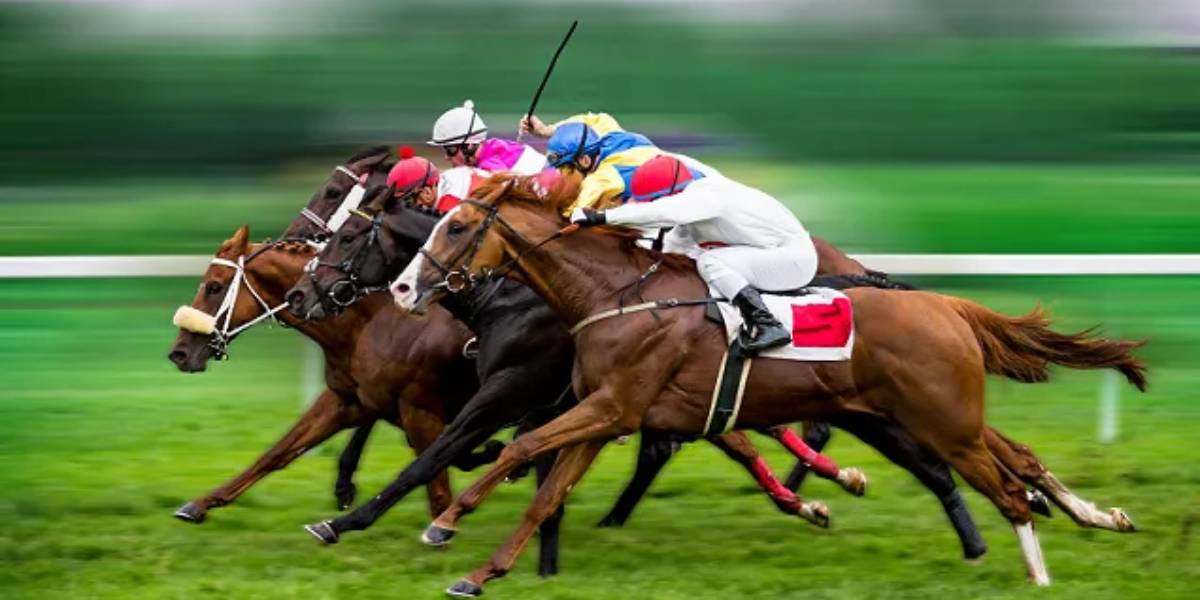 Racing remains the clearest home for Dutching in Australia because there are many runners, many prices, and many market types.
 Dutching win markets
Sprint and middle-distance races with eight to fourteen runners often lend themselves to Dutching. You might use speed maps, barrier positions, fitness and track pattern to narrow the race to three key chances, then spread your stake across them.Opposing a short-priced favourite
If a favourite looks vulnerable, Dutching two or three second-tier hopes can sometimes produce a more appealing combined price than backing the favourite outright.Place and each-way Dutching
During big carnivals, bookmakers may offer extra places, which can make place-market and each-way Dutching more interesting. The catch is that dead-heat rules, deductions and settlement quirks can affect equal-profit calculations, so rule awareness matters.Across bookmakers and exchange prices
Australian punters are not restricted to a single operator. You might take a fixed-odds price with one bookie, another runner at a second firm, and perhaps a lay or opposing position on the exchange if that sharpens the structure. That is one reason local calculators and guides are so useful. Betfair provides the exchange side; Matched Betting Australia positions its free resources hub as a local support point for calculators and offers research.Reading Australian horse-racing form for Dutching
Why form matters more when you back several runners
Dutching is not about spraying money across the field. It is about identifying a small cluster of runners whose combined winning chance is better than the market suggests.Key factors
Recent performance, distance suitability, class, track condition, rail position, barrier, map and likely tempo all matter. In Australian racing, settling position can be especially important. A practical Dutching approach is often to combine runners that cover different race shapes, such as one likely leader and one proven closer, without over-covering the market.Avoiding overcoverage
This is where many punters go wrong. In a large handicap, backing five runners between $6 and $15 often destroys the combined price. In most ordinary win markets, keeping the Dutch to two or three runners is far more disciplined.Dutching in Australian football, codes, and futures markets
 Dutching is not just for racing.
 A-League correct-score Dutching
If you expect a home side to win in a controlled way, you might Dutch 1-0, 2-0 and 2-1. That lets you express a match-shape view rather than a single exact-score guess.AFL and NRL winning-margin markets
When you have a strong read on game shape but not the precise score, margin bands can work well. You might Dutch home by 1-39 and home by 40+.Futures markets
Premierships, medal awards and season honours suit fixed-return Dutching because you can spread risk across several contenders without writing off the whole position if one falls away early.Dutching and timing risk in Australian markets
Once the game starts, the difficulty rises. Odds move quickly, liquidity can thin out, and the risk of getting only one leg matched at your target price becomes much higher. That is especially important in Australia, where the ACMA states that in-play sports betting online is a prohibited service under the Interactive Gambling Act.Using Dutching inside matched betting in Australia
This is where Dutching becomes especially practical.When the exchange market is missing or thin
Some markets are awkward to lay cleanly. In those cases, you can sometimes back outcome A at one bookmaker and outcome B at another, using Dutching to keep the qualifying loss under control.When rules differ
Tennis retirement rules are the classic example. If two operators settle retirements differently, a standard back-and-lay position can become messy. A bookmaker-to-bookmaker Dutch with aligned rules can sometimes be safer.When you want less exchange dependence
Some beginners simply find exchange betting unfamiliar. In that case, Dutching between bookmakers can act as a stepping stone into broader matched betting workflows. Matched Betting Australia’s site centres much of its education around calculators, promotions and low-risk conversion ideas for Australian users.Dutching tools and calculators for Australian punters
A modern Dutching calculator should support multiple selections, equal-profit and equal-return modes, decimal odds, rounded stakes and, ideally, bonus-bet scenarios. Those features matter because real-world betting is messy: prices move, promotions add conditions, and bookmaker-friendly stake rounding can make your staking look more natural. Matched Betting Australia’s free resources hub is one locally focused option for calculators, reload-offer content, and educational material. Imperial Wealth markets Sports Maximiser as a free odds-comparison and automation tool that scans bookmaker and Betfair prices, highlighting arbitrage, hedging and bonus-conversion opportunities while saving time on manual comparison.Step-by-step guide to placing your first Dutch bet in Australia
1. Choose a suitable market
Start with a market you understand, such as a Saturday metro race or a straightforward football result market.2. Narrow the field
Use form, match context or stats to reduce the market to two or three realistic selections.3. Shop for prices
Check a few bookmakers and, where relevant, Betfair. Record the best decimal price for each selection. Betfair’s exchange and local matched-betting resources make that comparison process easier for Australian users.4. Use a Dutching calculator
Enter the odds, choose either total stake or target return, and let the tool generate the stakes.5. Place the most price-sensitive leg first
If one leg looks likely to move, place that one first, then complete the rest quickly.6. Record the bet
Log total stake, projected return and combined odds. That gives you a proper basis for review later.How Australian bookmaker rules interact with Dutching
One of the most overlooked parts of Dutching in Australia is the rulebook. Two prices can look perfect in a calculator, yet the whole structure can become risky if the bookmakers settle the market differently. That matters because Australian operators often vary on the fine print for postponed events, dead heats, tennis retirements, rain-affected cricket, bonus-bet expiry and promotional payouts. Betfair’s exchange rules also differ from sportsbook rules in important edge cases, which is why a Dutching betting strategy should always start with a quick rules check, not just an odds check.Different rule sets across bookmakers
Australian bookies do not all treat unusual outcomes the same way. In racing, one bookmaker may settle a dead heat or protest in a slightly different way from another promotional market. In mainstream sports, operators can differ on whether a postponed match stands, is voided, or rolls over to a new date. Tennis is especially important because retirement rules can vary sharply, while cricket markets can be affected by rain reductions, revised overs, and abandoned matches. These differences matter because a Dutch depends on several legs working together as planned; if one leg is voided and another stands, your equal-profit structure can disappear instantly.Promotion-specific quirks
Promotions can change the effective value of a Dutch more than most punters realise. Extra-place offers in racing, early-payout promotions in football, and bonus-bet mechanics can all alter the true payoff. An early-payout offer is the clearest example. If one bookmaker settles your team as a winner when it goes two goals clear, but your hedge or opposing selection remains live elsewhere, the value of the whole structure changes immediately.Exchange and bookmaker rule clashes
Exchange-versus-bookmaker rule mismatches are one of the best reasons to understand Dutching properly. Betfair’s exchange rules are detailed and can differ from sportsbook treatment on incomplete events and in-play suspensions. In Australia, that becomes even more relevant because online in-play sports betting is generally prohibited under the Interactive Gambling Act, with limited exceptions such as genuine phone betting, so the legal and operational environment is already more restrictive than many punters assume.A practical rule-checking routine
A sensible approach is to read the core terms once for every bookmaker you use for Dutching, then keep a short note of the important differences. Focus on postponed events, dead heats, tennis retirements, cricket abandonment rules, bonus-bet returns, and any promotion-specific triggers such as extra places or early payout.Risks, limitations, and common mistakes in Dutching
 A realistic guide to Dutching has to be honest about what can go wrong. The biggest misconception is that backing more outcomes somehow creates profit automatically. It does not. Dutching changes the shape of your risk, but it does not create value on its own.