What is +EV betting in horse racing?
 Australian horse racing is a natural home for +EV betting because it offers what value-seeking punters need most: constant markets, plenty of bookmakers, several bet types, and a steady flow of new information. On any ordinary meeting, you can see fixed-odds prices from multiple corporate books, tote-derived prices that shift with late money, and exchange prices formed by other bettors. Scratchings, track upgrades or downgrades, rider changes, tempo expectations, and late betting pressure can all move a market quickly, sometimes leaving one price behind the rest. That is where positive expected value betting lives. The central promise of +EV betting is simple: you are not trying to prove you can pick every winner. You are trying to buy odds that are bigger than they should be. Most punters lose over time because they accept the bookmaker’s margin and take poor prices without asking whether the quote is actually generous. A value bettor tries to reverse that relationship by consistently taking the best of the price, so profit comes from the maths across hundreds of bets rather than from a single Saturday result. A single race proves nothing; +EV betting is a long-term process, not a one-race prediction contest.
 How Australian horse racing betting markets actually work
Fixed odds with corporate bookmakers
With fixed odds, your price is locked in when the bet is accepted, although later scratchings can trigger deductions that reduce the effective payout. Bookmakers frame a market with an overround, then move prices as money comes in and as liabilities build. This is also where many promotions sit, which is why matched betting Australia and promo-led +EV betting often overlap in racing. Tote and derivative tote products
The tote is pool-based. The displayed dividend is only indicative, because the final dividend depends on the size of the pool and where the late money lands. TAB explains that approximate dividends can move and that the final dividend is calculated after commission is taken from the pool. That is why tote overlays can appear, especially when public money piles into one or two runners late. Betting exchanges
An exchange lets punters back and lay against one another, with the exchange charging commission on net winnings in the market. Betfair says its Australian racing Market Base Rate is either 8 per cent or 10 per cent, depending on the state and racing code, and that matters directly when you are calculating EV, hedging, or trading. The racing bet types that matter for +EV in Australia
Win and Place markets
These are the foundation of most horse racing value models. The probability framing is clean, comparison across bookmakers is easier, and hedging on the exchange is more practical. If you are building a rating or comparing a bookmaker to Betfair, the Win and Place markets are usually the first place to start. a.Each-way betting in Australia
Each way is two bets: one Win and one Place. The hidden trap is that place terms vary by field size, operator rules and specific racing conditions. A generous Win quote does not automatically make the overall each-way bet value if the place fraction is poor. Many Australian rulesets pay three places in fields of eight or more, two places in fields of five to seven, and win only in smaller fields, but operator terms matter. Multiples and same-race multis
Promotions often push multis because they increase turnover, but modelling becomes harder. Correlation between legs can distort naive EV calculations, and hedging can be expensive or impossible depending on the market. Exotics: quinella, exacta, trifecta, first four
Exotics can be +EV in rare situations, often through pool overlays or promo mechanics, but the outcome space is far larger and tote takeouts are materially higher on many bet types. TAB says pool commission can range from 14.25 per cent to 25 per cent depending on the bet type, which is a reminder that exotics demand a stronger edge before they are genuinely attractive. The core rule: your probability must beat the implied probability
Australians mostly see decimal odds, so the implied probability is simply 1 divided by the odds. Odds of 5.00 imply 20 per cent. Odds of 4.00 imply 25 per cent. Break-even is the probability you need to justify the price. The whole game is deciding whether your estimate is better than the market’s estimate after all margins and frictions are considered. How Australian horse racing markets are priced
[caption id="attachment_10410" align="alignnone" width="1366"]
 Fixed odds bookmakers
[/caption]
Fixed odds mean the quoted price is locked when the bet is struck, but not immune from deductions. Sportsbet and other bookmakers explain that deductions are an industry-wide requirement after scratchings and are applied as cents in the dollar off the potential payout. For an EV bettor, that matters because a strong price can become only fair, or even poor, once the deduction is applied. Tote and parimutuel pools
With the tote, the final price remains unknown until betting closes and the pool is settled. That creates occasional value, but it also means the apparent overlay can disappear in the final minutes if the public piles in. The exchange matters because it gives you a second opinion, a hedging tool and, near jump, often the closest thing to a market consensus. Betfair also states that it is licensed and regulated in Australia and holds a betting exchange licence issued under Northern Territory law. Fixed odds, tote, and exchange: where +EV opportunities actually come from
Mispricing in Australian racing usually comes from market behaviour rather than mystery. Prices can lag after scratchings, track pattern changes, gear updates, or rider swaps. Popular stables, fashionable jockeys, and short-priced favourites can be overbet. Bookmakers may shade prices on well-known runners to manage liabilities. And because racing is fragmented across many books, one operator can sit at an outlier price longer than you would expect in a more centralised sport. Market percentages, overround, and why vig feels different in racing
A 12-runner race can easily be framed above 100 per cent, often well above it early in the day. Early markets can be softer but fatter; later markets can be sharper but more efficient. The exchange commission then sits on top as a second friction layer. Betfair’s Australian racing commission can be 8 per cent or 10 per cent, depending on state and code, so a bet that looks attractive on paper can become merely break-even after commission, deductions, and slippage. Odds, probability, and overround: the maths behind every field
 Decimal odds convert neatly into implied probability: In a fair market, the probabilities of all runners would add up to 100 per cent. In a bookmaker market, they add more than 100 per cent because the excess is the bookmaker’s margin. That is why even a good judge can lose if they keep taking bad prices.
 How to calculate EV for a win bet
With decimal odds, profit if you win equals stake × (odds − 1). The probability of losing is 1 minus your estimated probability of winning. Worked example
- Stake: $100
- Bookmaker price: 6.00
- Your rated chance: 20%
- Profit if the horse wins: $500
So: EV = 0.20 × 500 − 0.80 × 100 = 100 − 80 = +20 That +20 means an average expected profit of $20 per $100 bet across many similar wagers at the same edge. It does not mean this horse is supposed to win today. How to calculate EV for place and each-way bets
Place pricing in Australia is trickier because place terms vary by field size and rules. Each-way is two separate bets, so you need a Win view and a Place view. Place probability is not just win probability with a cosmetic tweak; it needs its own estimate or model. A poor place fraction can kill the value of the whole structure even when the win side looks generous. This is why shallow each-way betting content so often misleads. True odds in horse racing: turning form into a probability
True odds are your best estimate of what the horse should be in a fair market with no margin. In Australia, punters usually reach that number in one of three ways: Form-driven pricing
You build your own assessment from the form and convert it into a probability. Market-driven pricing
You use the exchange or another sharp market as your best available estimate, then look for bookmaker prices that are meaningfully bigger. Hybrid pricing
You start from the market, then adjust for factors you believe the market has underweighted. Horse racing form factors that actually move EV
This is where theory becomes practical. Good form work only matters if it changes your probability estimate. Track conditions and rating
Some runners improve sharply on soft or heavy ground, while others regress. Track condition is not colour; it is a pricing input. Map and tempo
Barrier, likely leaders, and projected pace shape the race. A horse that gets the right run in the right tempo should be shorter than one that needs everything to go right. Devigging and building a fair market for the full field
In racing you are not dealing with a two-outcome market, so you need a full-field approach. - Convert each runner’s odds into implied probability.
-
- Add the probabilities across the field.
- Divide each runner’s probability by the total to normalise back to 100 per cent.
- Convert each normalised probability back into fair odds.
This gives you a no-margin baseline and stops you treating an inflated bookmaker market as though it were already fair. Market-based modelling in Australian racing
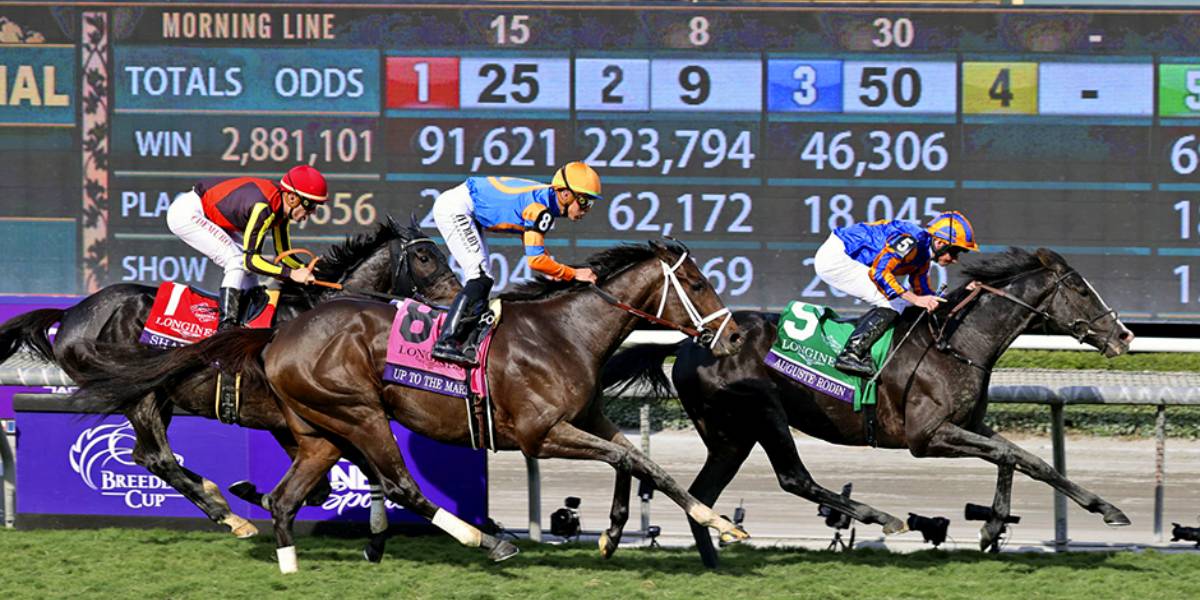 Near jump, the exchange often becomes the closest thing to a consensus price because it aggregates many opinions. You can use the exchange back and lay to estimate a fair midpoint, but only after accounting for spread, liquidity, and commission. Thin markets can mislead, so a price is only useful if it can actually be traded in a meaningful size.
 Line shopping in Australia: the overlooked edge
A few cents matters, especially when your edge is thin. Better prices cushion you against small modelling errors and compound over time. In fragmented Australian racing markets, line shopping across several bookmakers and the exchange is not a bonus; it is part of the edge. Treat the best available price as a requirement. Bonus bets and racing promos: where +EV and matched betting Australia overlap
A bonus bet changes the value equation because the stake is often not returned. That means a $50 bonus bet is not worth $50 in cash terms, but it can still create positive EV when used efficiently. Refund-if-second, refund-if-placed, and extra-place offers change the payout distribution and can push a neutral or slightly negative bet into positive territory. That is where matched betting Australia and +EV betting meet in practice. A promo calendar helps you plan turnover, avoid missing strong racing offers and build a repeatable weekly routine. Matched betting in Australian racing: lay betting, liability, and controlled risk
Classic matched betting means backing with the bookmaker and laying on the exchange so that the outcome is largely locked in, with profit driven by the promotion rather than by prediction. Pure EV-based racing plays are different: sometimes you do not lay because the overlay itself is your edge, but variance rises sharply. The practical middle ground is to use lay betting for risk control on promos and selected structures, while only taking unhedged value positions when your edge and bankroll can support the swings. Extra-place offers, arbitrage, and dutching
 Extra-place offers deserve separate attention because they are highly racing-specific. If a bookmaker pays an additional place beyond standard terms, the probability of collecting rises, and that can create value. Some bettors hedge this in a lower-risk matched style; others accept higher variance and treat the extra place as the edge. Arbitrage and dutching sit nearby. You may find bookmaker-to-bookmaker arbs, bookmaker-to-exchange arbs or, occasionally, tote-versus-fixed discrepancies. But execution is fragile. Prices move fast, stake limits bite, acceptance can fail, deductions can break the numbers, and commission still applies.
 Execution in Australian racing: timing, scratchings, and deductions
Timing matters because prices move. Scratchings can trigger deductions and wipe out the edge you thought you had. Exchange markets often tighten near jumps as liquidity improves, while very early prices can be noisy. Multi-account execution adds more friction because bookmakers have different limits and acceptance rules. A serious +EV betting workflow must account for all of that. Automated betting bots in Australia, and where HyperBot fits
 Automation can help with speed, consistency, and error reduction, but it does not create an edge by itself. Imperial Wealth’s pages describe HyperBot as automation built on +EV principles that identifies bookmaker promotions, pricing inefficiencies, and overlays in horse racing, then calculates odds, edges, and staking. The same business also says its automated betting bot can place bets across more than 80 Australian bookmakers and that credentials are stored locally on the user’s computer. Those are execution claims, not proof of profit, and they should be read that way.
 How automation fits a real workflow
The best use of automation is as infrastructure. You set the guardrails: minimum edge threshold, odds range, maximum stake, per-race exposure, and bankroll rules. The software monitors markets and promo conditions, then executes faster than manual clicking. More bookmaker access can also mean more price dispersion, which improves line shopping outcomes if the rules are sound. But responsibility still stays with the bettor: operator terms, affordability, monitoring, and safer gambling controls still matter. A practical weekly workflow for +EV betting in Australian racing
Start with the week’s promo calendar and identify the best racing offers. Build or refresh your prices for the meetings you want to target. Check the exchange for liquidity and baseline pricing. Shop the market for fixed-odds outliers. Apply your minimum-edge and staking filters. Place the bets. Log every position, including the price taken and the later market price. Then review the week not just by profit, but by process: how often you beat the market, how much promo value you extracted, and whether your execution remained disciplined. Conclusion: putting +EV racing into practice
+EV betting in Australian horse racing is not about finding certainty. It is about consistently taking prices that are bigger than your fair odds while surviving the real-world frictions of overround, deductions, commission, and variance. The strongest results usually come from combining sound probability work with ruthless line shopping, disciplined staking, and a practical understanding of how fixed odds, tote markets, and exchanges interact. Promos and bonus bets can lift the edge further, which is why weekly planning and Matched Betting Australia-style promo calendars remain so useful for serious punters. For readers looking to scale that workflow, tools such as Imperial Wealth’s HyperBot are best understood as execution layers on top of EV principles, not shortcuts around them. If the edge is real, automation can help you capture it faster and more consistently. If the edge is not real, the bot simply helps you lose more efficiently. That is the right lens for Australian racing: form first, fair odds second, execution third, and discipline all the way through. And because betting carries real risk, any strategy should sit alongside personal affordability limits and responsible gambling controls, including national self-exclusion tools such as BetStop where needed.